Here is an uncomfortable truth about cold calling: prospects do not hang up because of what you are selling.
They hang up because of how your voice sounds in the first four seconds.
When an amateur rep dials an executive, their tone is rushed, their pitch is high, and they sound desperate not to get interrupted. The prospect's brain instantly registers low status and triggers a polite brush-off: "We are all set, thanks."
Mastering cold calling is not about memorizing clever manipulation tricks. It is about vocal discipline, status projection, and genuine operational curiosity backed by sales tools like Apollo.io and CRM systems like HubSpot and Zoho CRM.
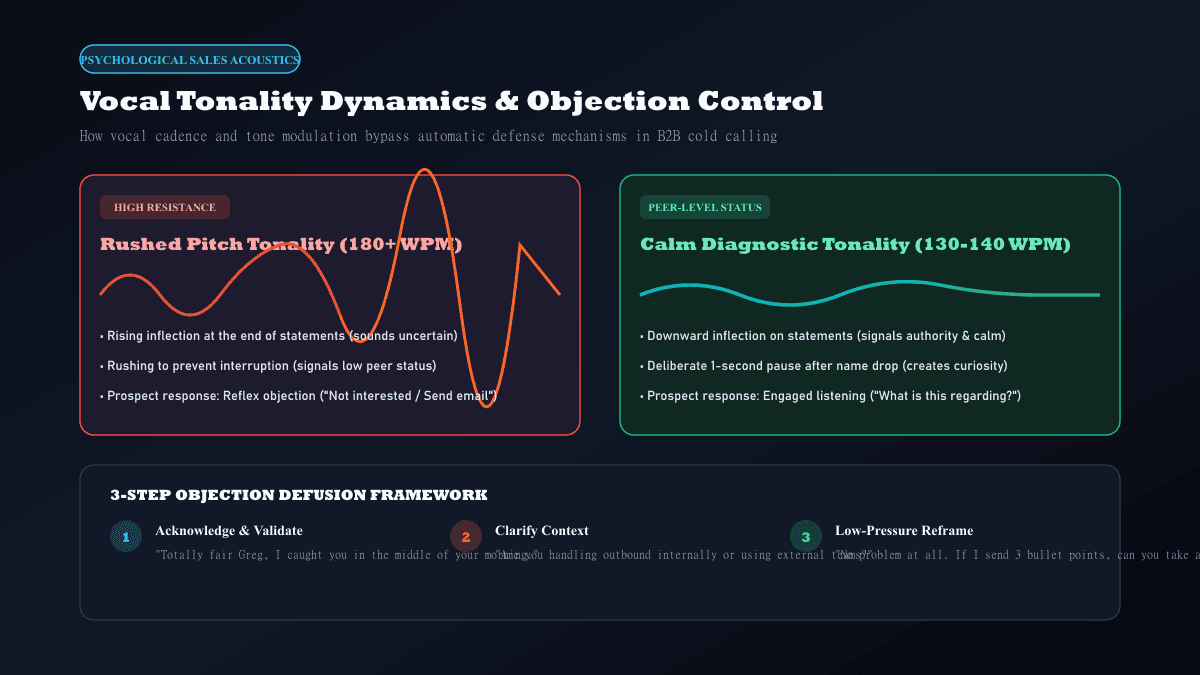
1. The Micro-Pause: How to Project Instant Authority
When an executive asks "Who is this?", the natural human reaction is to stammer through your name and company name as quickly as possible.
Fight that urge.
Try this instead:
- State your first name calmly.
- Pause for a full second.
- State your company and why you are calling.
That tiny one-second pause signals to the listener that you are comfortable in your own skin, unbothered by their seniority, and not desperate for their approval. It completely flips the status dynamic of the call.
2. Eliminating Upspeak (The Question Tone)
Many reps end their statements on a rising pitch, turning declarative sentences into uncertain questions:
- "Hi, my name is Willay with Apex Solutions?" (Sounds like you are asking for permission to exist).
- "Hi, my name is Willay with Apex Solutions." (Flat, downward inflection; sounds like a peer).
Downward inflection conveys competence. Executives trust professionals who speak with steady downward tonality because it signals deep familiarity with the subject matter.
3. The Re-Anchor Method for Handling Objections
When a prospect says "We already have a vendor for that," bad callers argue: "Yes, but our platform is 20% cheaper!"
Arguing with a prospect forces them to defend their current vendor. You will lose that debate every single time.
Instead, validate their decision and re-anchor the conversation using methods from our Gatekeeper Objection Playbook:
"Makes complete sense, Dave. If you are running a 50-person engineering team, I would be surprised if you didn't already have an APM tool in place. I am not asking you to replace them. Most teams we work with kept their primary vendor and just used our lightweight plugin for edge monitoring. Open to a 2-minute look at how they benchmarked the two?"
This disarms their defensive wall because you agreed with them rather than fighting them.
4. Telephony & CRM Setup for High-Rhythm Dialing
Even the sharpest vocal delivery falls apart if your software introduces audio delays:
- Audio Latency Control: Use verified VoIP dialers like RingCentral or VICIdial to prevent awkward 1-second delays that cause reps to talk over prospects.
- One-Click CRM Logging: Integrate your dialer with HubSpot or Salesforce so reps can log objection tags and schedule follow-up tasks without manual screen hopping.
5. The Exit Criteria: When to Disqualify
Not every call can or should turn into a meeting.
If an account does not match your ICP, does not have the budget, or has zero strategic pain, do not try to force a demo. Politely thank them for their time, log clean notes in your CRM, and move immediately to the next dial.
High pipeline velocity comes from talking to the right accounts, not from bullying the wrong ones into an awkward 15-minute Zoom.
Want to Sharpen Your Team's Phone Execution?
Building an outbound engine that consistently books qualified meetings requires daily coaching, call review discipline, and proven conversational mechanics.
Explore my background and experience or schedule an introductory call to see how we can level up your outbound sales pipeline.